Article 4 Directions in London and Hertfordshire: Which Boroughs and Streets Have Lost Permitted Development Rights

By Anderson & the LCCL Construction Team | Finchley N3
Permitted development is a national right, but councils can switch it off locally. The tool they use is an Article 4 direction — a legal order under the General Permitted Development Order that removes specific permitted development rights from a defined area, so work that would normally need no planning application has to go through the full householder route instead. Most directions in London sit inside conservation areas and remove the smaller rights: front windows and doors, painting, paving, roof materials. Some remove roof extensions, side extensions or rear extensions outright. A handful — basements in Camden, Westminster, Kensington & Chelsea and Hammersmith & Fulham — apply across the whole borough. If your house is inside one, it changes the route, the fee and the timescale, and it is the first thing we check.
As LABC Building Excellence Award Winners 2024 for Best Residential Extension in London — and London Regional Winners again in 2026 for Best Conversion or Alteration to an Existing Home — we check the conservation area map and the Article 4 schedule for every address before the first call ends, because the answer decides whether a project is a Lawful Development Certificate or a planning application. This list is the schedule we work from, borough by borough, verified against each council's own published directions on 8 September 2026. Directions are added every year, so treat it as the starting point and check your council's page before relying on it. Not sure where your house stands?
What an Article 4 direction actually does
A direction does not ban anything. It removes the automatic permission the national rules grant, so the work needs a planning application and is judged on its merits — design, character, neighbours — like any other application. The householder fee is £548 from April 2026, the decision takes eight weeks from validation, and our loft conversion planning guide and rear extension planning guide cover what each council looks for. Two things to remember: a direction covers only the rights it names (a direction on front windows does not stop a rear dormer), and it covers only the area it names (a conservation area may have a direction on three streets and none on the rest). The schedule below records both.
North London
Barnet — directions on 10 of the borough's 16 conservation areas, including Hampstead Garden Suburb (1971), Monken Hadley, Totteridge and Mill Hill. A borough-wide direction on small houses in multiple occupation since May 2016. Outside the ten conservation areas the national rules apply.
Enfield — a 2006 direction covering 11 conservation areas including Enfield Town, Winchmore Hill, Southgate Green and Bush Hill Park; Grange Park and Meadway added in 2008; Enfield Town updated in 2017.
Haringey — directions on the Rookfield Estate (1978), Noel Park, Peabody Cottages and Tower Gardens only. None in Muswell Hill, Crouch End or Highgate, where the conservation area rules alone apply.
Camden — Hampstead, Belsize, Fitzjohns/Netherhall and Swiss Cottage (in force 1 September 2010, amended June 2026); Primrose Hill since 1983; and a borough-wide direction on basements since 1 June 2017, so every basement in Camden needs planning permission.
Islington — directions on 40 of the borough's 42 conservation areas, mostly covering windows, doors and painting.
Hackney — Shacklewell Green (October 2019), Brownswood and Well Street (May 2025) and Beck Road (May 2025). None on Stoke Newington, Clissold Park or Clapton.
Central and West London
Westminster — a city-wide direction on basements since July 2016; property-level directions at Abbey Gardens NW8 (1969), the Queen's Park Estate W10 (1992), Bristol Gardens, Moncorvo Close, Relton Mews and Sussex Gardens.
Kensington & Chelsea — more than 200 street-specific directions inside conservation areas made between 1969 and 2014; Norland (July 2013) covers any enlargement or alteration; a borough-wide direction on basements since April 2016.
Brent — Queen's Park conservation area: front windows and doors, painting, paving, walls, roof tiles, chimneys and outbuildings, and roof alterations need permission.
Hammersmith & Fulham — a borough-wide direction on basements since April 2018; property-specific directions within conservation areas.
Ealing — Brentham Garden Estate (1976), Bedford Park, the Hanger Hill Garden Estate, Hanger Hill (Haymills), Churchfields and The Grove.
Hounslow — Bedford Park (July 2001) and Gunnersbury Park; a borough-wide direction on small houses in multiple occupation since September 2023.
South London
Wandsworth — street-specific: 15–36 Commondale (2000), 23–67 Westover Road (2000), 62–72 Wandsworth Common West Side (2001) and the Heaver Estate.
Lambeth — none on the Clapham, Abbeville Road or Brixton conservation areas; directions on Lansdowne Gardens, Albert Square, Stockwell Park (1975), Hyde Farm (2002) and Streatham Lodge (2010) among others; a small-HMO direction since 2024.
Merton — householder directions on John Innes Merton Park and Wilton Crescent only; small-HMO directions across seven wards from November 2022 and a further thirteen from March 2026.
Richmond upon Thames — street-level directions in the Richmond conservation areas (Bellevue Road, Glebe Road, Hillersdon Road, The Vineyard and others), Kew, Sheen Road and Richmond Riverside.
Southwark — the Sunray Estate and a few individual sites; small-HMO and commercial-to-residential directions.
Lewisham — directions on 26 conservation areas including Blackheath, Brockley, Telegraph Hill and Forest Hill; borough-wide small-HMO directions since 2020 and 2024.
Greenwich — Ashburnham Triangle (2014), with others per conservation area.
Bromley — roof-extension rights removed in the Petts Wood Area of Special Residential Character and on Chislehurst Road (July 2022); upward-extension rights removed in 16 areas the same year; borough-wide small-HMO since September 2022; older conservation area directions at Bickley, Foxgrove and Chelsfield Park.
East London
Waltham Forest — directions on 10 of 15 conservation areas including Walthamstow Village (1977); the Highams Area of Special Character (September 2020); borough-wide small-HMO.
Tower Hamlets — no householder directions; a small-HMO direction in a defined area since January 2021.
Newham — Woodgrange (1977), Durham Road and Romford Road; borough-wide small-HMO since July 2013.
Hertfordshire
St Albans — Verulam Road and Fishpool Street, Sopwell Lane and Albert Street, Cunningham Avenue and Childwickbury (where most permitted development is removed), plus 15 rural directions.
Watford — street-specific directions in Nascot, Nascot Road, the Civic Core and Watford Heath, covering extensions, roof alterations and porches in some streets and painting and fences in others.
Hertsmere — The Royds in Potters Bar (July 2015), removing rights for dormers, rooflights, windows, paving and walls; a small-HMO direction across the Potters Bar wards made in April 2026.
Welwyn Hatfield, Broxbourne — directions per conservation area; check the council schedule for the specific streets.
What it means for your project
If your address is on this list, three things change. The route becomes a householder planning application rather than a Lawful Development Certificate — the certificate guide explains the difference. The timescale is the same eight weeks, but the decision is discretionary, so the design has to satisfy the council's extension guidance rather than just the national dimensions. And the fee doubles, from £274 for a certificate to £548 for an application. What does not change is the build price: a dormer or a rear extension costs the same to construct whichever route the paperwork took, and our fixed from-prices apply either way.
If your address is not on the list but the house is in a conservation area, the conservation area rules still remove roof extensions, side extensions and two-storey rear extensions from permitted development on their own, without any direction. A single-storey rear extension within the 3 or 4 metre limit usually stays permitted development inside a conservation area unless a direction says otherwise — which is exactly the kind of distinction the schedule above exists to settle.
The projects this guide is built on
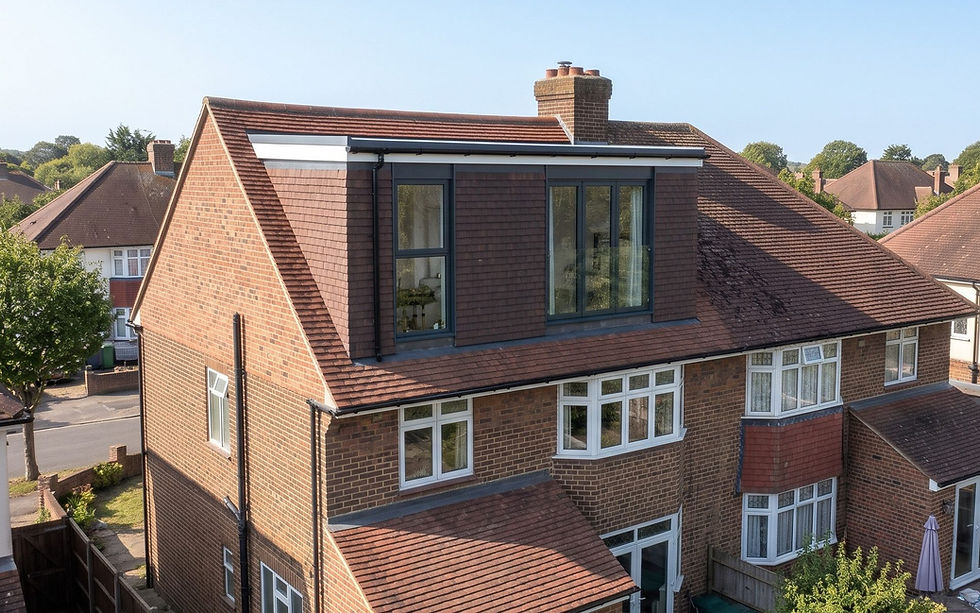
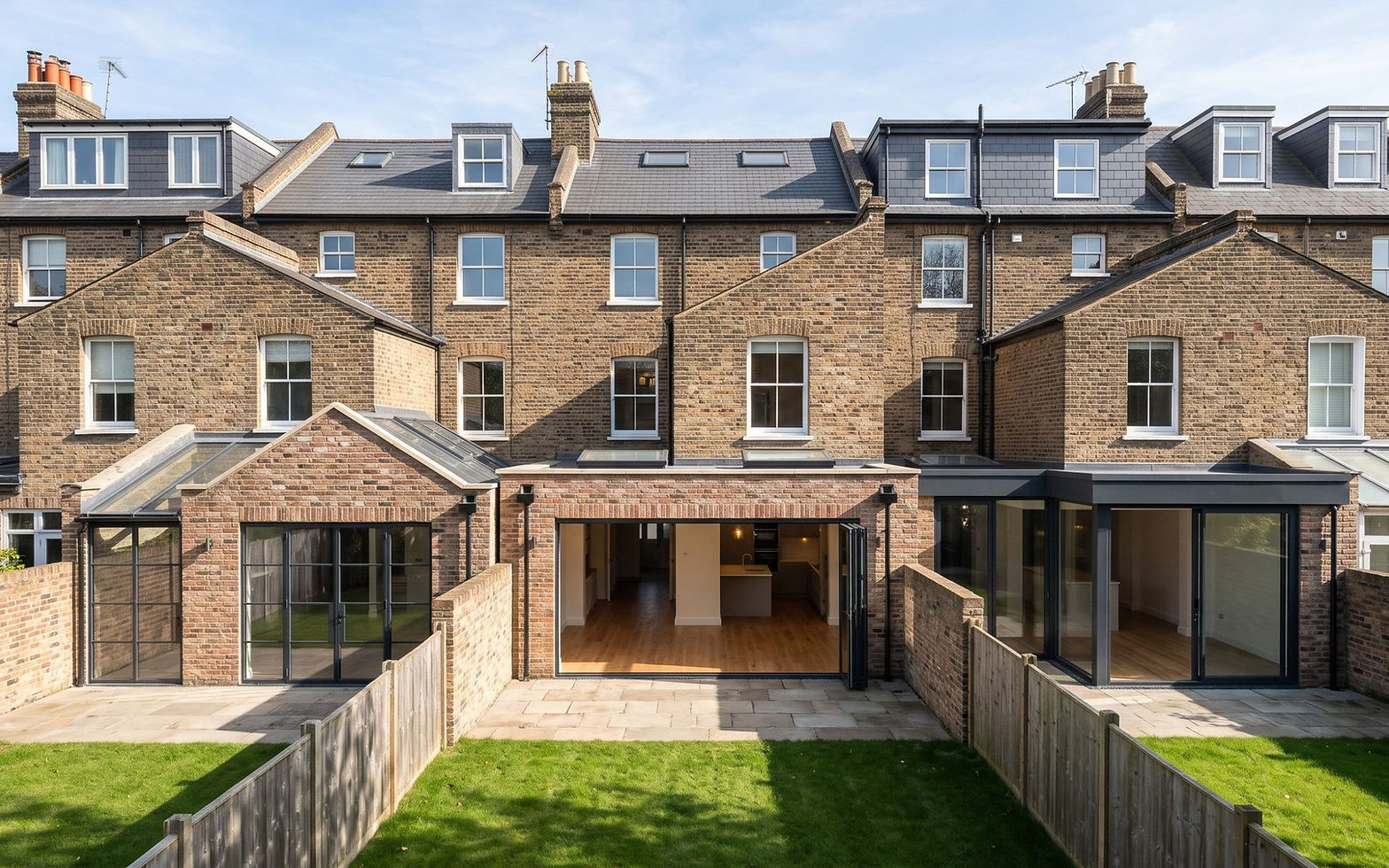
At Holmwood Gardens in Finchley N3 a 1930s semi inside a conservation area went through a householder planning application for its rear and kitchen extension, with brickwork and detailing agreed with the conservation officer. At Fitzjohns Avenue in Hampstead NW3 — in the Fitzjohns/Netherhall conservation area, which carries a Camden direction — even a Velux loft on an 1870s house needed a planning application. And at Bohun Grove in East Barnet EN4, outside any direction, the hip-to-gable loft went through on a Lawful Development Certificate while the full-width rear extension took the planning route; the finished project won the LABC Building Excellence Award 2024 for Best Residential Extension in London. All of them are on our projects page.
Anderson's advice
Check the direction, not just the conservation area. Two houses on the same road can sit on different sides of a direction boundary, and the council map is the only thing that settles it. Ten minutes on the council's planning constraints map before you commission drawings saves weeks of redesign after a certificate comes back refused.
Why homeowners choose LCCL
One contract and one point of contact: our team checks the constraints, designs the loft or extension for whichever route applies, obtains the Lawful Development Certificate or planning permission, produces the structural drawings and builds it, with building control inspecting and a completion certificate at handover. Every project carries a 12-month workmanship guarantee and a 10-year LABC structural warranty. Already have an architect's drawings and an approval? We price the build as drawn within seven working days.
What our clients say
“We have used Lccl in the past for our rear house extension and have come back to instruct Lccl for our loft conversion too to our house in North London. As before we are very happy with the services from Lccl and we highly recommend their design and construction services for both home extension or loft conversion including both design and build services.”
— Mia M, Google Reviews
Frequently asked questions
What is an Article 4 direction?
A legal order made by a council under the General Permitted Development Order that removes specific permitted development rights from a defined area — a street, an estate, a conservation area or a whole borough. Work covered by the direction then needs a householder planning application instead of being automatic. It does not ban the work; it means the council decides it on its merits.
How do I find out if my house is covered by an Article 4 direction?
Every council publishes its directions and a planning constraints map; the direction will name the streets or the conservation area it covers and the rights it removes. We check the map and the schedule for every address before the first consultation call ends, and the list above is the schedule for the boroughs and councils we work in, verified in September 2026.
Does an Article 4 direction change the cost of a loft or extension?
It changes the paperwork, not the build. The council fee rises from £274 for a Lawful Development Certificate to £548 for a householder application, the design has to meet the council's own extension guidance, and the decision becomes discretionary — but the construction cost is the same, and our fixed from-prices apply whichever route the project takes.
Get a figure for your own project
Not sure whether your project needs planning permission? Five questions about your house and your project, and you see whether it is permitted development and the fixed from-price. Lawful Development Certificate included on every permitted development job.
To book a free 30-minute consultation call about your loft or extension, call LCCL Construction on 020 8037 7332 or get an instant estimate online — six questions, about two minutes, and you see a real range for your postcode on screen. Finchley N3 based, covering all of London and Hertfordshire.
One team, one contract, one point of contact — from first sketch to handover.