Extend or Move? What a London Move Costs in 2026, Set Against a Loft or an Extension — With the Numbers

By Anderson & the LCCL Construction Team | Finchley N3
Finchley, 9 November 2026. The question behind most of our consultation calls is not "what does a loft cost" but "is it worth doing this house, or should we move". The answer has a number in it, and the number has two halves that people rarely put side by side: what a move actually costs in fees and tax, which is money that does not come back, and what a loft or an extension costs, which is money that mostly stays in the house. This piece puts the two halves next to each other for an average London house in 2026, using the government's house price index, HMRC's stamp duty bands, the published moving-cost surveys and our own price list. Every figure is sourced and dated in the method section at the end.
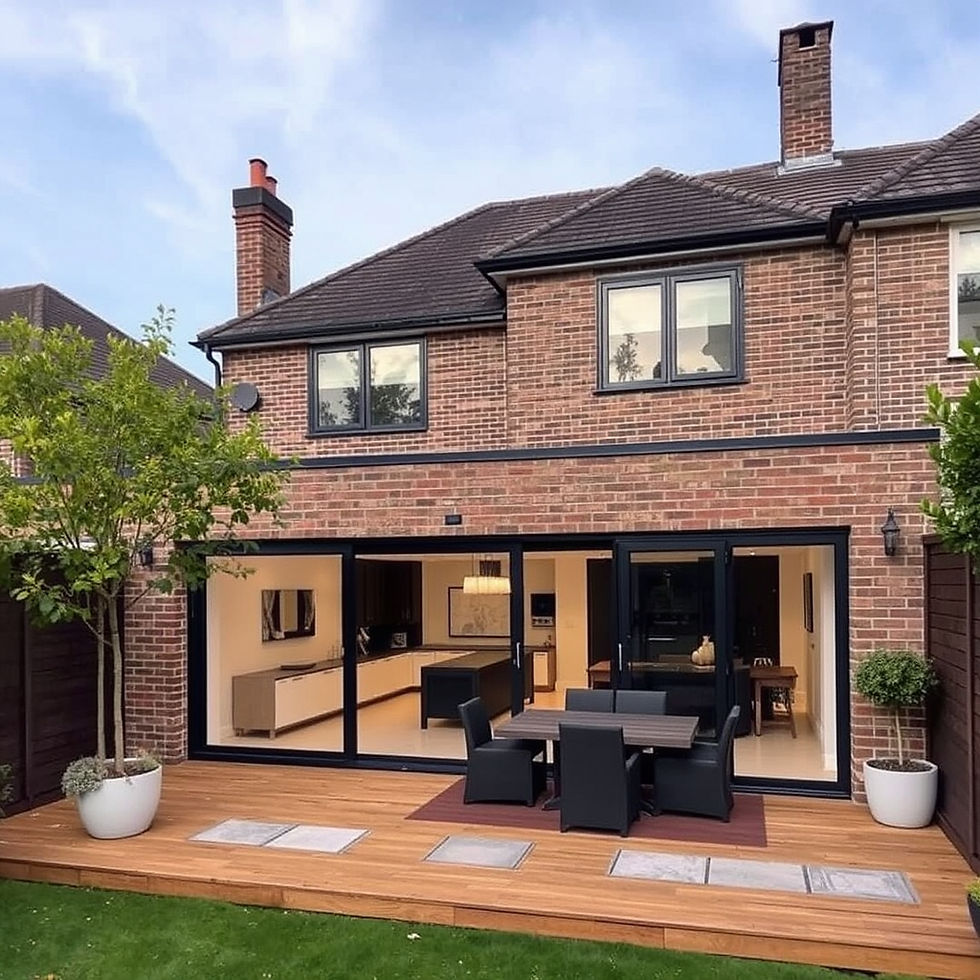
As LABC Building Excellence Award Winners 2024 for Best Residential Extension in London — and London Regional Winner 2026 for Best Conversion or Alteration to an Existing Home — we build lofts and extensions across London and Hertfordshire, and the Bohun Grove EN4 project in the photograph — a loft, a rear extension and a renovation on one house instead of a move — is the project that won the 2024 award. We have an interest in the answer, so the figures below are the official ones, not ours, until the section on what a loft or an extension costs.
Not sure whether your project needs planning permission? Enter your postcode and tick what you want to build — about two minutes, free, and the from-price for each part that qualifies appears on screen and in your inbox.
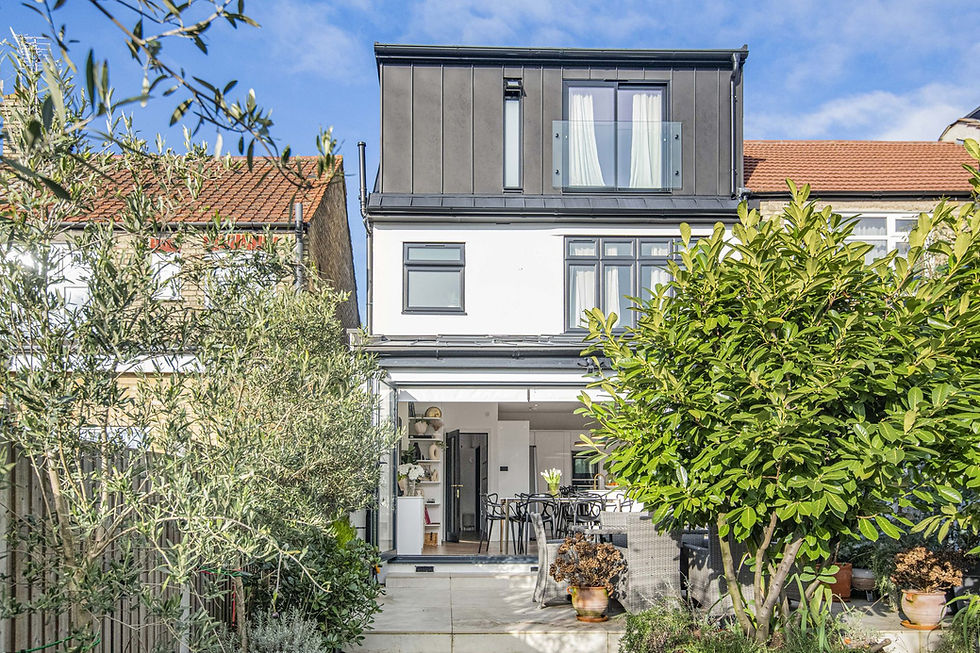
The London house in the example
HM Land Registry's UK House Price Index for August 2026, published on 21 October 2026, puts the average London terraced house at £649,000 and the average London semi-detached house at £731,000; the average London home bought by someone who already owned a home — the mover's price — was £696,000. London prices overall were 2.2 per cent lower than a year earlier, a fall driven by flats (down 5 per cent); terraced houses were flat and semis up 1.8 per cent. The example that follows is a family in an average London terrace who want a fourth bedroom and a bigger kitchen, and who could get it either by moving to an average semi or by adding a loft and a rear extension to the house they have.
What the move costs before the price step
The stamp duty bands for a home mover in England, as published by HMRC, are nothing on the first £125,000, 2 per cent on the next £125,000, 5 per cent on the portion from £250,001 to £925,000 and 10 per cent above that to £1.5 million. On a £731,000 semi that is £2,500 on the second band and £24,050 on the third: £26,550 of stamp duty. On the mover's average of £696,000 it is £24,800. First-time buyer relief does not apply to a mover, and the 5 per cent surcharge for an additional property does not apply as long as the old home is sold within 36 months.
The other costs of moving come from two published sources that use different bases, so they are shown separately rather than added across. Which?, in its October 2026 cost-of-moving piece using Reallymoving's England medians, puts the estate agent at £4,473, conveyancing for the sale and the purchase together at £2,241, surveys at £510, removals over 30 miles at £624 and the energy performance certificate at £65, and gives a total cost of moving in London of just over £32,000 including stamp duty. The HomeOwners Alliance calculator, updated 5 November 2026, uses an estate agent fee of 1.42 per cent including VAT — which on a £649,000 sale is about £9,200 rather than the England median, because the fee scales with the price — and allows about £1,000 for mortgage arrangement and valuation fees.
Stamp duty on the £731,000 semi: £26,550 (HMRC bands, home mover).
Estate agent on the £649,000 sale: about £9,200 at 1.42 per cent inc. VAT (HomeOwners Alliance rate); the England median is £4,473 (Which? / Reallymoving) because the fee scales with the price of the house.
Conveyancing, sale and purchase: £2,241 (Which? / Reallymoving).
Survey, removals and EPC: £510 + £624 + £65 (Which? / Reallymoving).
Mortgage arrangement and valuation: about £1,000 (HomeOwners Alliance).
Total before the price step: about £40,000 — of which the stamp duty and the agent's fee are the bulk and none of it comes back.
Add the £82,000 difference between the average terrace and the average semi and the family has spent about £122,000 to gain the semi. The £82,000 is still in the house as equity; the £40,000 is not. Which?'s London total of just over £32,000 is a useful check on that figure — it is lower because it is built on the London median price rather than a £731,000 purchase and a £649,000 sale.
What staying and building costs
Our own price list, design and build at economy specification with a shell-and-plaster finish and the survey, drawings, structural calculations and building control included, starts a rear dormer loft at £56,400 inc. VAT (£47,000 + VAT) and a single-storey rear extension at £42,000 inc. VAT (£35,000 + VAT); a loft and an extension together under one contract start at £98,400 inc. VAT (£82,000 + VAT). The final price is fixed in writing after the survey and is postcode dependent, and the things the figure does not cover — kitchen and bathroom fittings, floor coverings, the structural opening-up of the existing rooms — are the same things you would spend on in a new house anyway. A Lawful Development Certificate, which is how the council confirms a loft or extension is permitted development, is £274; a householder planning application is £548.
Put beside the move, the whole loft-and-extension package costs less than the £122,000 the semi costs to reach, and about £58,000 more than the fees the move burns. The comparison is not quite like for like — the semi comes with a bigger plot and a different street — but on space it is: a rear dormer gives 20 to 30 square metres of floor and an extension 15 to 25, which is the fourth bedroom, the bathroom and the kitchen-diner the family moved for.
What the work does to the value of the house
Nationwide published its analysis of its house price index data on 15 October 2025: a loft conversion or an extension that adds a large double bedroom and a bathroom can add as much as 24 per cent to the value of a three-bedroom, one-bathroom house; an extension that takes a terraced house from three bedrooms to four adds about 10 per cent; and a 10 per cent increase in floor space, all else equal, adds 5 per cent to the price of a typical house. Those are national averages from Nationwide's senior economist Andrew Harvey, not a promise for any particular street. On the £649,000 London terrace, 10 per cent is about £65,000 and the 24 per cent ceiling is about £156,000. Even at the cautious end, the uplift covers most of the cost of the work; at the top end it exceeds it. A move adds nothing to the value of anything — the £40,000 is spent.
When moving still wins
The arithmetic favours staying more often than people expect, but not always, and the cases where it does not are worth being honest about. If the house is in the wrong place — the school, the commute, the family — no extension fixes that. If it is a flat, there are no permitted development rights and every extension is a planning application with a freeholder behind it. If the garden is too short for a rear extension to leave anything outside, or the roof is too low for a loft without a mansard, the work may not give the rooms you want. If the house sits in a conservation area, a dormer needs an application and the design is the council's to judge — usually approved, but slower. And if you expect to move within three or four years anyway, you are building for the next owner and relying on the uplift to carry the cost. In those cases the £40,000 of moving fees is the price of getting the right house, and worth paying.
For the rest — a house in the right street with a hipped or gabled roof and a reasonable garden — the test is simple. Add up the stamp duty and the agent's fee on the move you are considering, using the HMRC bands and your own asking price. If the figure is more than half the cost of the loft or extension that would give you the same rooms, the work is the better use of the money, because it is still in the house when you sell.
Anderson's advice
Do the loft and the extension in one programme if you can afford to. Our team prices the two together from £98,400 because the scaffold goes up once, the steels are designed once, the party wall notices go out once and the house is disrupted once instead of twice, two years apart. The clients who extend first and come back for the loft — and plenty do — pay for the second scaffold and the second set of drawings, and live through the second build. The Bohun Grove house in the photograph was done as one contract.
What our clients say
“We are very happy with the services from Lccl, Alex has done a great job on design and construction. We have used Lccl in the past for our rear house extension and have come back to instruct Lccl for our loft conversion too to our house in North London. As before we are very happy with the services from Lccl and we highly recommend their design and construction services for both home extension or loft conversion including both design and build services.”
— Mia M, Google Reviews
Method and sources
House prices: HM Land Registry, UK House Price Index for August 2026, published 21 October 2026 — London averages by property type (terraced £649,000, semi-detached £731,000, detached £1,164,000, all £554,000) and by buyer status (former owner-occupier £696,000); provisional first estimates. Stamp duty: HM Revenue & Customs, Stamp Duty Land Tax residential property rates, as published on gov.uk on 9 November 2026, home-mover bands; calculations are ours. Moving costs: Which?, "How much does it cost to move home in 2026?", 10 October 2026, using Reallymoving England medians; HomeOwners Alliance cost-of-moving calculator, modified 5 November 2026 (estate agent fee 1.42 per cent inc. VAT, mortgage fees). The two sources use different price bases and are not added together. Value added: Nationwide Building Society analysis of its house price index data, reported 15 October 2025 (Andrew Harvey, senior economist) — 24 per cent, 10 per cent and 5 per cent figures are national averages. LCCL prices: our published price list, November 2026, design and build at economy specification, inc. VAT at 20 per cent; postcode dependent and fixed in writing after the survey. All figures are rounded to the nearest £50 or thousand as shown; the worked example is an average, and a real house will differ in both directions.
Frequently asked questions
Does it cost less to extend or to move in London in 2026?
For a family in an average London terrace wanting one more bedroom and a bigger kitchen, usually extending. The move to an average semi costs about £40,000 in stamp duty, agent, legal and moving fees that are not recovered, plus the £82,000 price difference; a rear dormer loft starts from £56,400 inc. VAT and a rear extension from £42,000, and the work adds value to the house rather than leaving the money with HMRC and the agent.
How much does a loft conversion add to the value of a house?
Nationwide's October 2025 analysis of its house price data puts a loft conversion or extension that adds a large double bedroom and a bathroom at up to 24 per cent on a three-bedroom, one-bathroom house, a three-to-four-bedroom extension on a terrace at about 10 per cent, and 10 per cent more floor space at about 5 per cent. These are national averages, not a guarantee for any one street.
How much is stamp duty on a £700,000 house for a home mover?
£25,000: nothing on the first £125,000, 2 per cent (£2,500) on the next £125,000 and 5 per cent (£22,500) on the £450,000 above £250,000, under the HMRC bands published on gov.uk. The 5 per cent additional-property surcharge does not apply if you sell your previous main home within 36 months of completing.
Check your own house
Not sure whether your project needs planning permission? Enter your postcode and tick what you want to build — about two minutes, free, and the from-price for each part that qualifies appears on screen and in your inbox.
To put the numbers for your own house against a move, book a free 30-minute consultation call with LCCL Construction on 020 8037 7332, or get an instant estimate for a loft, an extension or both in about two minutes. The planning side of a loft is explained in how the 40 and 50 cubic metre rule works.
One team, one contract, one point of contact — from first sketch to handover.