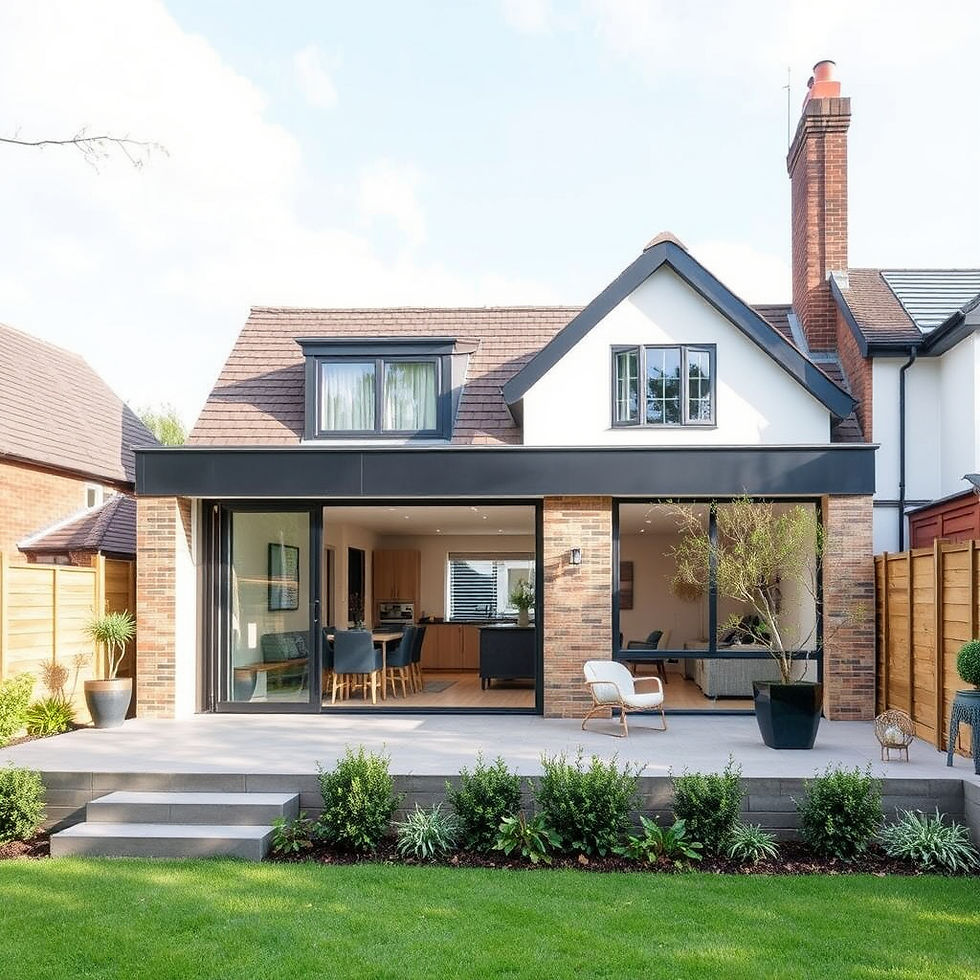
Your Extension or Loft Application Is Now Decided by a Planning Officer, Not a Committee: What Changed on 31 October 2026 and What Did Not

By Anderson & the LCCL Construction Team | Finchley N3
On 31 October 2026 a change to the planning system in England came into force that affects every homeowner applying to extend a house or convert a loft. From that date a council must have a planning officer decide a householder application. It can no longer be sent to the planning committee of elected councillors, with two narrow exceptions. The same applies to prior approvals and to Lawful Development Certificates.
This piece sets out what the regulations say, what they change for a London or Hertfordshire homeowner, and what they leave exactly as it was. Every statement about the law is taken from the text of the regulations, and the method is at the end.
As LABC Building Excellence Award Winners 2024 for Best Residential Extension in London — and London Regional Winner 2026 for Best Conversion or Alteration to an Existing Home — we prepare and submit the Lawful Development Certificate, prior approval or householder application on every extension and loft we build, under one contract with the design, the structural engineering and the build.
Not sure whether your project needs planning permission? Enter your postcode and tick what you want to build — about two minutes, free, and the from-price for each part that qualifies appears on screen and in your inbox.
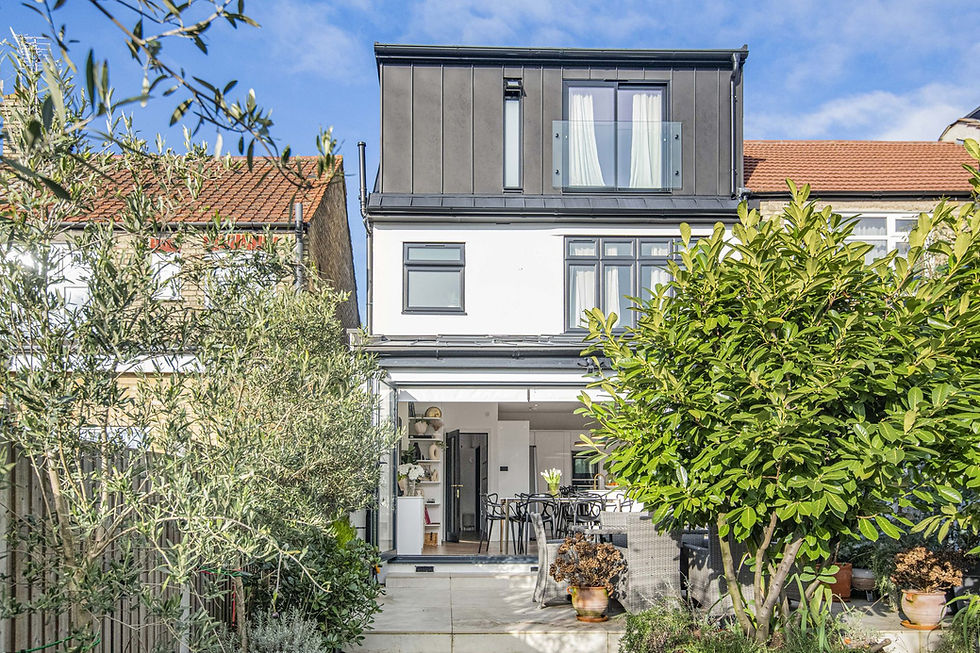
What the regulations say
The change is made by the Town and Country Planning (Discharge of Local Planning Authority Functions) (England) Regulations 2026, Statutory Instrument 2026 No. 854. They were made on 15 July 2026 and came into force on 31 October 2026, under powers added to the Town and Country Planning Act 1990 by the Planning and Infrastructure Act 2025.
Regulation 4 is one sentence: a local planning authority “must make arrangements so that any Schedule 1 application made to that authority is determined by an officer of that authority.” Schedule 1 then lists fifteen kinds of application. Five of them are the ones a homeowner meets:
A householder application: the planning application for an extension, a loft conversion in a conservation area, a wraparound or a first-floor extension.
Prior approval under the permitted development rules: the route for a single-storey rear extension of 3 to 6 metres on an attached house, or 4 to 8 metres on a detached one.
A Lawful Development Certificate for proposed development: the certificate that confirms a permitted development loft or extension needs no application.
Approval of details required by a planning condition, such as samples of materials.
A non-material amendment to a permission already granted.
The regulations also say the council “must not make arrangements that limit the officer’s discretion as to how to determine that application.” The officer decides.
The two exceptions
A householder application can still go to committee in two cases. The first is where the council considers it connected with an application for listed building consent; then a nominated councillor and a nominated officer may agree to refer it, if in their view it raises a significant planning matter or an issue of significance to the local area. The second is an “own-interest” application: one made by the council itself, by a councillor or by a council officer.
A house in a conservation area is not an exception. Unless the building is listed, a householder application there is decided by an officer like any other.
What this changes for a homeowner
In practice most householder applications were already decided by officers under each council’s own scheme of delegation. What the regulations remove is the route by which some of them reached committee: a councillor “calling in” an application, or a council rule that sent an application to committee once it attracted a set number of objections. Where that happened it added a wait for the next committee date and a decision made by vote.
From 31 October the decision on a householder application is made by the case officer against the council’s policies and design guidance. Neighbours are still consulted and their comments are still weighed, but the number of objections no longer changes who decides.
For a homeowner that makes two things more important. The first is the council’s published guidance on extensions and roof alterations, because that is what the officer measures the drawings against. The second is pre-application advice where the scheme is close to the line: the officer’s written view before submission is now the best available guide to the decision.
What has not changed
The rules themselves. The permitted development limits, 3 metres for a rear extension on an attached house and 40 or 50 cubic metres for a loft, are untouched, and so is each council’s design guidance.
Neighbour consultation. Neighbours are notified of a householder application as before, and the 21-day consultation on a prior approval still applies. A prior approval can still be refused where a neighbour objects and the officer finds harm to their amenity: across London, 23 per cent of larger-extension notifications were refused in the nine months to June 2026, as we set out borough by borough.
The timescale. The statutory period for a householder application is still eight weeks from validation, and 42 days for a prior approval.
The fees. £548 for a householder application, £249 for a prior approval and £274 for a Lawful Development Certificate.
The right of appeal against a refusal.
Listed buildings. Listed building consent, and a planning application connected with it, can still be referred to committee.
What we are doing differently
Nothing in how a project is designed. Our team already designs to the council’s published guidance and confirms the route before the drawings start: a Lawful Development Certificate on every permitted development project, and a householder application where one is needed. The practical difference is in what we tell clients to expect: a decision from the case officer inside the statutory period, with no committee date to wait for.
Anderson's advice
Read your council’s extension and roof guidance before you settle on a design, or ask us to. It is a short document, it is free on the council’s website, and from 31 October it is the test your drawings are measured against by the one person who decides. Where a scheme is close to the line, a written pre-application response from the officer is worth having before the full drawings are finished.
What our clients say
“Architect, planning, party walls and construction completed of our loft conversion on time and with professionalism. I highly recommend LCCL!”
— Andrew Wilton, Trustpilot
Frequently asked questions
Who decides a householder planning application now?
A planning officer of the council. Since 31 October 2026 regulations in England require householder applications to be determined by an officer. The exceptions are an application connected with listed building consent, which may be referred to committee, and one made by the council, a councillor or a council officer.
Can a councillor still send my extension application to the planning committee?
Not a householder application, unless it is connected with an application for listed building consent or is an own-interest application. In those cases a nominated councillor and a nominated officer must agree to refer it.
Does this change whether I need planning permission?
No. The permitted development rules, the fees, the eight-week period and the neighbour consultation are unchanged. The regulations change who makes the decision, not what is allowed. The council has the final say on any application.
Method
The regulations were read in full on legislation.gov.uk on 16 November 2026 (S.I. 2026/854, the version as made). The date made, the commencement date, regulation 2(2), regulation 4, regulations 5 and 6 and the list in Schedule 1 are quoted or summarised from that text, and checked a second way against the Explanatory Note printed with the regulations, which describes regulation 4 in the same terms. The London refusal figure is from the government’s prior-approval table (Table PDR1) for October 2025 to June 2026, as analysed in our earlier piece. The statement that most householder applications were already decided by officers is a general description of how councils work and is not a figure; we have not put a percentage on it. This piece describes the law and does not predict how any council will apply it.
Check your own house
Not sure whether your project needs planning permission? Enter your postcode and tick what you want to build — about two minutes, free, and the from-price for each part that qualifies appears on screen and in your inbox.
To talk through an extension or loft conversion and the route it takes, book a free 30-minute consultation call with LCCL Construction on 020 8037 7332, or get an instant estimate in about two minutes. The loft rules are in loft conversion planning permission in London.
One team, one contract, one point of contact — from first sketch to handover.